


How to Get Rid of Air in Water Pipes: Flush & Bleed Guide

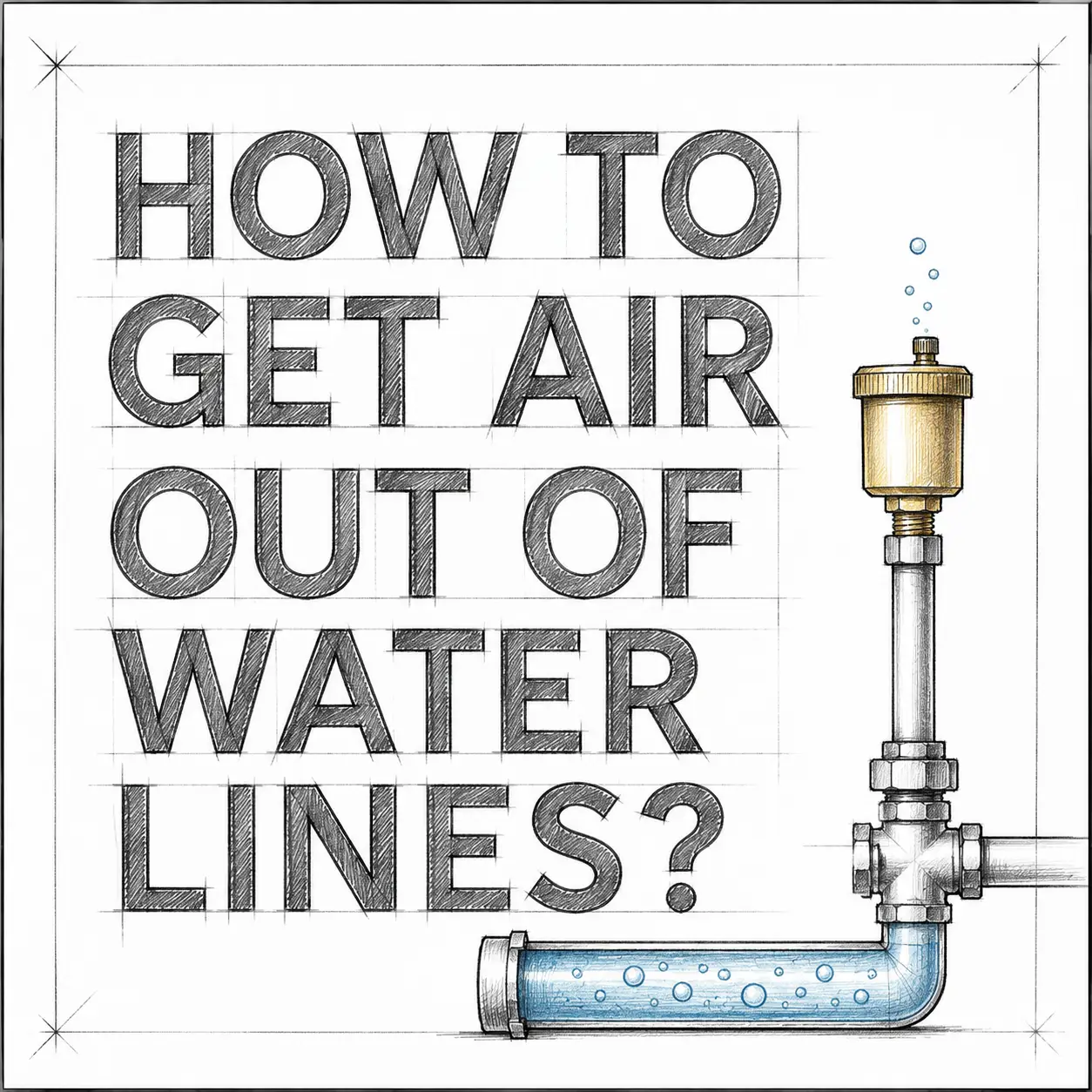
How to Get Air Out of Water Pipes and Stop It Coming Back
If your tap spits and sputters before water flows or your pipes knock and gurgle at night trapped air is almost certainly the cause. Air pockets form whenever the system loses pressure, gets drained for repairs, or develops a small leak on the supply side.
This guide explains where air comes from, how to identify it, and how to flush and bleed your water pipes in five steps you can do yourself in under 20 minutes.
Why Air Gets Trapped in Water Pipes
Air enters a plumbing system through several specific routes. Knowing which one applies to your home makes the fix faster and prevents it from happening again.
Common Causes of Air in Water Pipes
Maintenance & Repairs
Any time a section of pipe is drained and refilled, air fills the empty space. If it isn't vented properly as water returns, it stays trapped.
Suction-Side Leaks
Even a pinhole leak on the intake side pulls air in alongside water. This is especially common on older supply pipes that have been patched rather than replaced — still a familiar sight in unmodernised Victorian and Edwardian terraces across North West London.
Sudden Pressure Drops
A supply interruption from your water company, or a failing pressure reducing valve, can draw air into the network through valves and fittings.
High Points in Pipework
Air naturally rises. Sections of pipe that run upward and then level off collect air pockets that water alone won't dislodge.
Corroded or Loose Fittings
In older properties, joints that have degraded slightly let air seep in even when there's no visible leak.
Pressure that's too low creates voids where air settles; too high causes turbulence that traps micro-bubbles. For most UK residential systems, 1–3 bar is the normal range. A basic pressure gauge available for a few pounds at any hardware shop tells you within seconds whether pressure is part of the issue.
Signs You Have Air in Your Pipes
These are the most common symptoms — and how seriously to take each one.
Sputtering or Spitting Taps
Any tap, especially first thing in the morning. Low severity common after any pressure change.
Gurgling Sounds in Walls
Near bends and high points in pipework. Low to medium severity.
Banging or Knocking
Water hammer throughout the system, louder near appliances. Medium severity can loosen fittings over time.
Inconsistent Pressure
Upstairs fixtures weaker than downstairs. Medium severity.
Air in Shower Pipes
Shower head sputters or flow cuts in and out. Low to medium severity.
Knocking Inside Hot Water Cylinder
Heard at the unit itself. Medium to high severity reduces the efficiency of the cylinder.
If you hear banging when the washing machine fills or the toilet refills, the repeated pressure shock is gradually stressing every joint in the system. Fix it within a few days.
How to Flush and Bleed Air Out of Water Pipes — 5 Steps
Flushing your water system (also called bleeding the pipes) works for both mains-pressure combi systems and gravity-fed systems with a loft tank and hot water cylinder. Allow 15–20 minutes and do it when no appliances are mid-cycle.
1 Shut Off the Main Stopcock
Find your stopcock typically under the kitchen sink or in the airing cupboard. Turn clockwise until it stops. Switch off the washing machine, dishwasher, and any water softener first.
2 Drain the System Completely
Open every tap starting at the highest point in the house. Work downward floor by floor. Flush all toilets and run showerheads until water stops. You'll hear gurgling that's correct.
3 Open All Taps and Valves
Leave every outlet half-open. This allows water and air to exit simultaneously once supply is restored, rather than creating a pressure surge.
4 Restore Water Supply Slowly
Turn the stopcock anticlockwise a quarter turn at a time, pausing between turns. Close taps from the lowest upward once each flows steady and clear. Finish with the highest tap last.
5 Check Pressure and Flow
Open two or three taps simultaneously flow should be steady with no spitting. If one area still sputters, reopen that tap fully for 30 seconds. Check pressure is within your supplier's normal range.
How to Prevent Air from Coming Back
Once the system is clear, a few habits keep it that way:
- After any repair or planned shut-off, bleed the system before returning to normal use open taps top to bottom before fully restoring pressure.
- Fit air release valves at the highest points in your plumbing. These open automatically when air accumulates and close once water reaches them.
- Flush your hot water cylinder annually. Limescale and sediment build-up creates micro-pockets that mix with heated water and cause knocking.
- Check compression joints under sinks and behind appliances every two years — corrosion creates entry points for air.
- Monitor your pressure gauge twice a year. A reading outside the normal range warrants a look at the pressure reducing valve.
Why Do I Keep Getting Air in My Pipes?
If you bleed the system and the problem returns within 24–48 hours, a one-off flush won't solve it. The underlying cause is still active.
Most common reasons air keeps coming back:
- An active micro-leak on the suction side of a pump or at a loose fitting
- A failing seal on a shower pump or circulating pump
- A pressure reducing valve that is drifting
- A faulty check valve or water hammer arrestor
What This Looks Like in a North West London Home
Where air gets in, and where you will find the valve that stops it, depends almost entirely on when your house was built. These are the patterns that come up most often across Barnet, Brent and Harrow.
1930s semis — Mill Hill, Edgware, Burnt Oak and Hendon
The internal stopcock is usually under the kitchen sink, or in a low cupboard beside the front door where the supply pipe rises through the solid floor. Almost all of these houses have been extended at the back at some point, and the newer run of pipework often climbs over a flat-roof extension before dropping back down. That high point is exactly where air settles. If only the kitchen or the downstairs cloakroom spits, start with that added run rather than draining the whole house.
Victorian and Edwardian terraces — Finchley, Golders Green and Hendon
Here the stopcock is more often at the cellar head, under the front bay floorboards, or in the void beneath the hallway. In properties where the supply has never been upgraded, the incoming main can still be lead as far as the internal stopcock. Pipe runs sit behind lath and plaster rather than plasterboard, so tracing a suspected ingress point by eye is rarely realistic — it needs proper tracing equipment instead of lifting floors on a guess.
Post-war blocks and converted flats
Each flat normally has its own isolation valve, typically in the airing cupboard or under the sink, while the riser serving the whole block is controlled by a communal stop tap that is not yours to operate. Draining and refilling your own flat can push air into a neighbour’s pipework, so work outlet by outlet and refill slowly.
Gravity-fed or combi — it changes the fix
If you have a cold water storage tank in the loft and a hot water cylinder in the airing cupboard, you are on a gravity-fed system, and air most often enters through the tank when the float valve is set too low or the tank lid is missing. If there is no loft tank and no cylinder, you are on a mains-pressure combi, and air almost always follows a repair, a burst nearby, or an interruption to the supply.
Hard water makes it look worse than it is
North London sits in a hard water area. Limescale builds up inside tap aerators, shower heads and older isolation valves, and a badly scaled outlet spits and stutters in a way that is easy to mistake for an airlock. Before you drain the whole system, unscrew the aerator on the worst tap and have a look.
Which stop tap is yours, and which is not
There are two on your supply. The external stop tap sits under a small metal cover in the pavement or footpath and belongs to your water supplier — Affinity Water across Harrow and parts of Barnet, Brent and Enfield, Thames Water across most of the rest of North London. That one is theirs to operate, not yours. The internal stopcock, and every pipe after it, is your responsibility as the homeowner. If your internal stopcock will not turn or will not seal, sort that out before anything else: without it you have no quick way to stop a leak.
One thing to be clear about
If the knocking is coming from the boiler itself or from the central heating circuit rather than from the hot and cold taps, that is gas appliance work. We do not carry out gas work and cannot advise on it — that needs a Gas Safe registered engineer. Everything on this page concerns the cold and hot water supply pipework, which is a different system.
When the Problem Keeps Returning — Call a Plumber
These situations need a plumber, not another flush:
Pressure Outside Normal Range
If pressure stays outside the normal range after adjusting the pressure reducing valve, the valve itself may need replacing.
Air Returns Within 24–48 Hours
There's an active ingress point most likely a micro-leak on the suction side or a failing shower or circulating pump seal.
Sudden Water Hammer
If banging started suddenly rather than after a repair, this can indicate a failed check valve or water hammer arrestor.
Persistent Cylinder Knocking
Knocking inside the hot water cylinder that persists after flushing may indicate sediment damage to the element.
If any of those four match what your system is doing, the cause sits upstream of anything a flush will fix, and it needs tracing rather than repeating the process. That kind of diagnosis is part of our general plumbing repair work across North West London, where the pipework is checked before anything is replaced.
Frequently Asked Questions
Is it safe to keep using water when there's air in the pipes?
For occasional sputtering, yes, it's more of an annoyance than a risk. If you're experiencing regular water hammer (banging sounds), continued use gradually stresses pipe joints, so it's worth fixing within a few days.
How long does it take to flush air out of water pipes?
The five-step process takes 15–20 minutes for most homes. Larger properties with multiple zones may take up to 30–40 minutes if you're working through each section carefully.
What is the difference between flushing and bleeding water pipes?
"Flushing" refers to the full drain-and-refill sequence for the whole system. "Bleeding" refers specifically to releasing trapped air from a single pipe or radiator. For whole-house air problems, the five steps above cover both.
Why does my tap sputter only in the morning?
Overnight pressure drops are common in mains-fed systems especially if neighbours are on the same supply line. The sputtering clears once pressure stabilises. If it takes more than a minute to settle, check your pressure reducing valve.
Why do I have air in my shower pipes but not my other taps?
Shower pipes often run to higher points in the house where air naturally collects. Try running the shower cold for 30–60 seconds with full flow. If it doesn't clear, do a full system bleed starting from the highest outlet.
Can air in pipes damage a hot water cylinder?
Yes, over time. Air pockets that mix with heated water inside the cylinder cause knocking sounds, reduce heating efficiency, and can accelerate sediment build-up. Flushing the cylinder annually prevents this.
Why does the problem come back after I've already flushed the system?
Recurring air almost always means there's an active entry point a small leak, a loose fitting, or a pump seal that's starting to fail. Flushing clears the symptom; finding and sealing the entry point fixes the cause.
Still Got Air in Your Pipes?
If the problem keeps coming back, there's an active entry point that needs finding. Our qualified plumbers can diagnose and fix it usually in a single visit, and if the pressure never fully recovers it is worth reading what we find in Barnet, where the ground is high and the water is hard, and in Finchley, where a converted house often shares its pipework between flats.

About Mohammad Reza Hosseini
Mohammad Reza Hosseini is the founder of Fix Your House, based in Mill Hill, London NW7. He leads each project from first visit to handover — design and build under one roof, carried out by our in-house team and managed external trades.
View all posts by Mohammad Reza Hosseini