Pipe Replacement

how to connect PVC to metal pipe: 7 Proven Fixes That Last!

how to connect PVC to metal pipe
Plumbing Guide Mill Hill & North West London

How to Connect PVC Pipe to Metal: A Practical Guide for UK Homeowners

Connecting PVC pipe to metal — whether that's copper, galvanised steel, or cast iron — is one of the most common plumbing tasks in older UK homes. Done correctly, the joint will hold for years without leaks. Done wrong, it becomes a slow drip behind a wall or a sudden failure under pressure. This guide walks through every reliable method, the risks associated with each, and the situations where a professional should take over.

Understanding the Two Pipe Types Before You Start

Before choosing a fitting, you need to know exactly what you're working with on both ends.

PVC comes in several grades. For cold water supply and drainage in the UK, uPVC is standard. CPVC is rated for hot water. The outside diameter and wall thickness vary between pressure and waste pipe, so always measure before buying fittings.

Metal pipe in UK homes typically falls into three categories:

Copper

The most common, used in hot and cold supply lines. Usually 15mm or 22mm in diameter.

Galvanised Steel

Found in older properties, often pre-1970s. Prone to internal corrosion and scale build-up over time.

Cast Iron

Most commonly found in drainage stacks in Victorian or Edwardian properties.

Knowing your pipe type matters because each metal requires a different transition strategy. Copper connects differently from threaded steel, and cast iron drainage connects differently from pressure systems.

The Right Connection Method for Each Scenario

There is no single universal fitting. The correct method depends on the pipe type, the application (pressure vs drainage), and the pipe diameter.

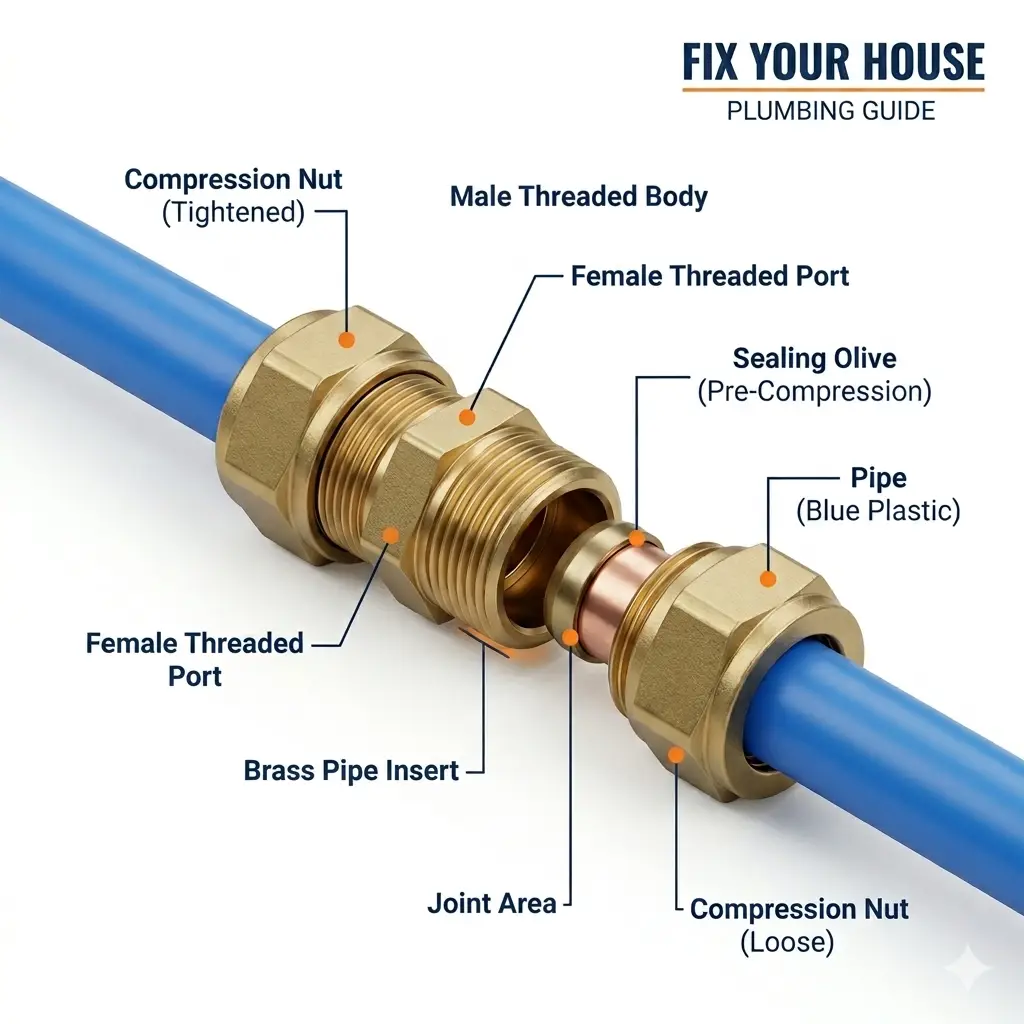
Educational diagram showing the assembly of a brass compression fitting with olive and compression nut for copper to PVC pipe connection.

Compression Fittings (Copper to PVC)

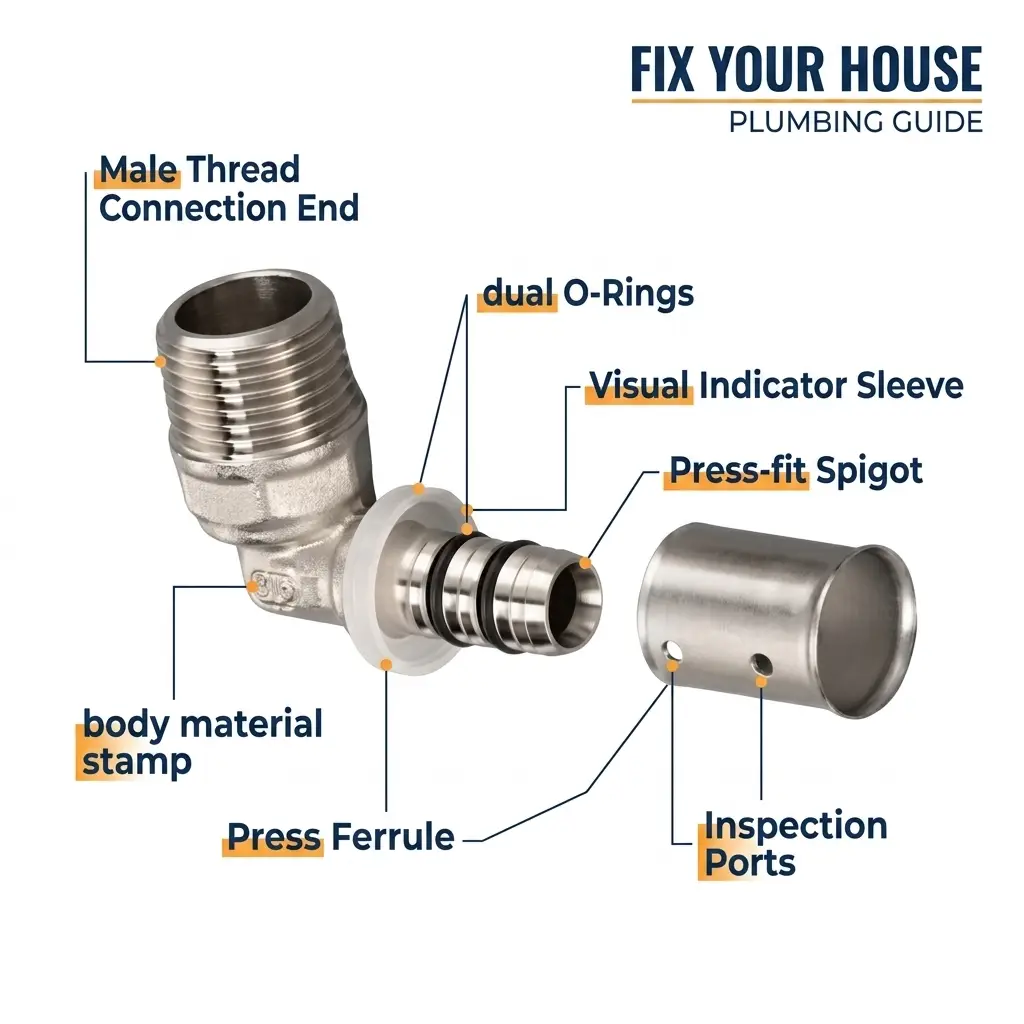
Technical infographic of a push-fit plumbing connector illustrating internal gripping mechanism for plumbing supply lines.

Push-Fit Fittings (Fastest Method)

Engineering diagram of a threaded brass transition adapter used for connecting steel pipes to PVC pipes in plumbing systems.

Threaded Transition Fittings (Steel to PVC)

Technical plumbing diagram showing a rubber transition coupling with stainless steel clamps connecting cast iron and PVC drainage pipes.

Rubber Transition Couplings (Drainage and Cast Iron)

Tools Required

  • Pipe cutter (rotary type for copper, hacksaw for steel or PVC)
  • Deburring tool or fine file
  • Two adjustable wrenches or pipe wrenches
  • PTFE tape
  • Pipe measure and marker
  • Pipe insert tool or the correct size inserts
  • For solvent weld joints: PVC primer and cement, lint-free cloth

Common Mistakes and How to Avoid Them

1
Using the wrong fitting rating

A fitting rated for cold water only should not be used on a hot water pipe. Check the temperature and pressure rating on the packaging before purchase.

2
Skipping the deburring step

A burr inside the pipe will catch debris and restrict flow over time. It will also prevent push-fit connectors from seating properly.

3
Over-tightening compression fittings

More torque does not mean a better seal. Over-tightening deforms the olive, which then fails to seal. Copper olives should be deformed slightly but not crushed.

4
Mixing incompatible standards

UK and US pipe sizes are not always interchangeable. A nominal 15mm UK compression fitting is not the same as a half-inch US fitting. If using parts from different sources, verify the actual outside diameter.

5
Using solvent cement on uPVC pressure pipe without primer

For pressure pipe, always use primer — it softens the pipe surface and produces a full structural bond rather than a surface contact bond.

6
Not supporting the joint

All pipe joints need to be mechanically supported. A joint taking the weight of an unsupported pipe run will eventually fail due to mechanical stress, regardless of how well it was made.

When the Connection Should Not Be DIY

Some situations fall outside what a careful, informed homeowner should attempt without professional involvement:

Any connection to the incoming mains supply before or at the meter

Joints inside walls, floor voids, or under concrete where failure means significant damage before the leak is discovered

Galvanised steel that is heavily corroded — the pipe may need a full replacement that requires proper pipework design

Any work on a shared stack or drainage system in a multi-occupancy building

Where building regulations or lease conditions require a certified plumber to sign off on the work

All of these come down to the same thing: the cost of a failed joint is far higher than the cost of the joint itself. If your connection falls into one of those categories, our plumbing repair team in North West London can take the pipework on — and it helps to send a photo of the existing pipe and fitting first, so the right transition parts arrive with us.

Frequently Asked Questions

Can you glue PVC directly to copper pipe?

No — solvent cement bonds only to PVC. To join PVC to copper you need a mechanical transition fitting (compression, push-fit, or threaded adapter). There is no adhesive that forms a reliable structural bond between PVC and metal.

Does galvanised pipe react with PVC fittings?

The materials themselves don't react chemically, but galvanised pipe should always be transitioned via a brass fitting rather than connecting directly to plastic threads, which can strip. The bigger concern with galvanised is internal corrosion — check the pipe condition before committing to a repair.

What is the lifespan of a PVC-to-copper compression joint?

A properly made compression joint with the correct insert can last as long as the pipe itself — 25 years or more. The most common point of failure is the olive, which can be replaced without cutting the pipe.

Is PTFE tape enough to seal a threaded PVC-to-metal joint?

For low-pressure situations, yes. For mains pressure connections, use PTFE tape plus a small amount of approved thread sealant compound for additional security, particularly on steel threads which have a coarser profile.

Can push-fit fittings be used with all types of PVC pipe?

Not always. Some push-fit fittings require a pipe insert when used with PVC (as opposed to copper), and some are not rated for PVC at all. Check the manufacturer's compatibility table before use.

What size rubber coupling do I need for cast iron to PVC drainage?

You need to match the outside diameter of the cast iron pipe (not the nominal size). Cast iron drainage pipe in the UK typically has an OD of around 100mm for a 4-inch stack, but measure directly — old pipe can vary. Then select a rubber coupling that bridges that OD to the OD of the PVC drainage pipe you're connecting.

Summary

Connecting PVC to metal pipe is achievable without specialist tools in many situations, but the method varies significantly depending on what you're joining. Compression fittings work well for copper-to-PVC supply connections. Threaded brass adapters are the correct route for galvanised steel. Rubber transition couplings are the standard for cast iron drainage. In every case, the quality of the cut, the correct use of inserts, and not over-tightening are what determine whether the joint holds long-term.

If the connection is in a location that would be difficult or costly to access after the fact, or if the existing pipework is in poor condition, it's worth having a professional assess it first.

author-avatar

About Mohammad Reza Hosseini

Mohammad Reza Hosseini is the founder of Fix Your House, based in Mill Hill, London NW7. He leads each project from first visit to handover — design and build under one roof, carried out by our in-house team and managed external trades.

Leave a Reply

Your email address will not be published. Required fields are marked *